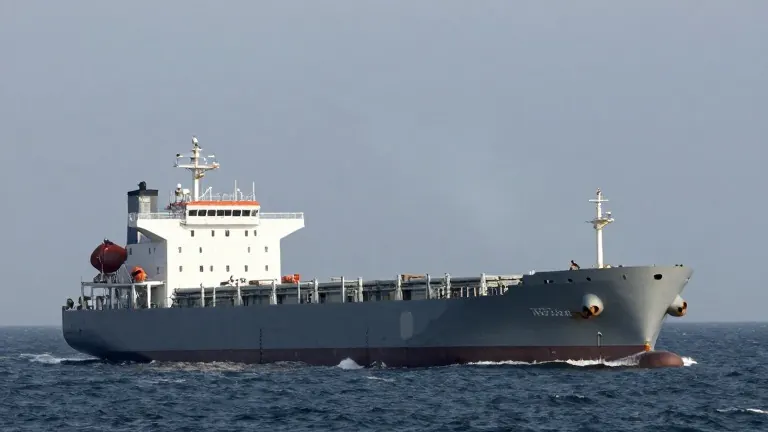
Egypt Votes to Deploy Military Assets to Defend Saudi Arabia
Parliament granted Cairo authority to assist Riyadh against Houthi strikes, a shift that risks direct engagement for the North African state.
By Kaito Garnier ·

Egyptian citizens face a new security reality as their government gains legislative power to enter the regional conflict. Parliament approved a mandate on Monday allowing the military to support Saudi Arabia if Riyadh requests help against Yemen’s Houthi militia. This decision marks a formal step toward direct involvement for a country that has largely stayed out of ground combat in the region for decades.
The timeline of this escalation began last week when President Abdel Fattah al-Sisi requested parliamentary approval to defend the Gulf ally and the world’s largest oil exporter. The request followed intensified Houthi attacks that threatened the Bab el-Mandeb Strait, a critical waterway leading to the Suez Canal. The Houthi group, backed by Iran, has recently struck Riyadh’s international airport and facilities owned by Saudi Aramco. These hits disrupted commercial flights and oil exports, raising stakes for global energy markets and regional trade routes.
Egypt’s previous engagement in the Yemen conflict dates to March 2015, when it joined the Saudi-led coalition as a naval partner. The Egyptian military sent warships to secure Red Sea shipping lanes and deployed approximately 800 ground troops. However, Cairo played a limited combat role in that phase and has avoided large-scale foreign ground deployments since the 1991 Gulf War. The current authorization changes that historical pattern by explicitly linking Egyptian forces to the defense of Saudi territory.
Diplomatic efforts continued alongside the military buildup. Foreign Minister Badr Abdelatty and intelligence chief Hassan Rashad traveled to Riyadh on Wednesday to deliver a letter from Sisi to Crown Prince Mohammed bin Salman. Sisi outlined that Egypt’s support would focus on defending Saudi borders and territory rather than launching attacks into Yemen. Abdelatty stated afterward that Cairo still seeks to explore every opportunity for a diplomatic resolution to the Yemen conflict.
Saudi Arabia remains a key financial and political partner for Egypt, providing billions of dollars in aid, central bank deposits, and energy supplies under the Sisi administration. The two nations also share a security interest in stabilizing the Red Sea. Crown Prince Mohammed bin Salman visited Cairo on September 15 to discuss security and navigation issues after the fighting in Yemen reignited. The parliamentary vote on Monday formalizes the military backing for those discussions.
The approval places Egypt in a more active role in the expanding conflict between the Saudi-led coalition and the Houthi militia. The Houthis control the Yemeni capital, Sanaa, and have become a volatile front in the wider US-Israeli war against Iran. Aid agencies warn that conditions in Yemen are worsening, with the country already suffering one of the world’s most severe humanitarian crises. The Egyptian vote does not change the humanitarian situation on the ground immediately, but it changes the military balance of power in the Red Sea and the Persian Gulf.
Source: The Jerusalem Post