Lebanese photojournalist survives strike that killed colleague
Zeinab Faraj recounts the drone and missile attack in al-Tiri that left her colleague Amal Khalil dead and Bazzi and Hourani killed.
By Kaito Garnier ·
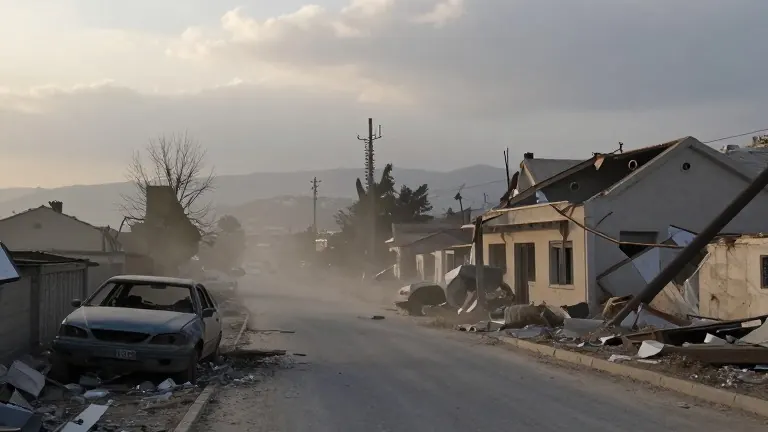
Zeinab Faraj, a 21-year-old photojournalist, is still learning to walk after being trapped under rubble in late April. The attack that left her with facial and hand injuries killed her colleague, Amal Khalil, and two men traveling in a separate car. Faraj, who is preparing to return to university for her radio and TV degree, describes a day that began as a routine documentation trip and ended in a struggle for survival.
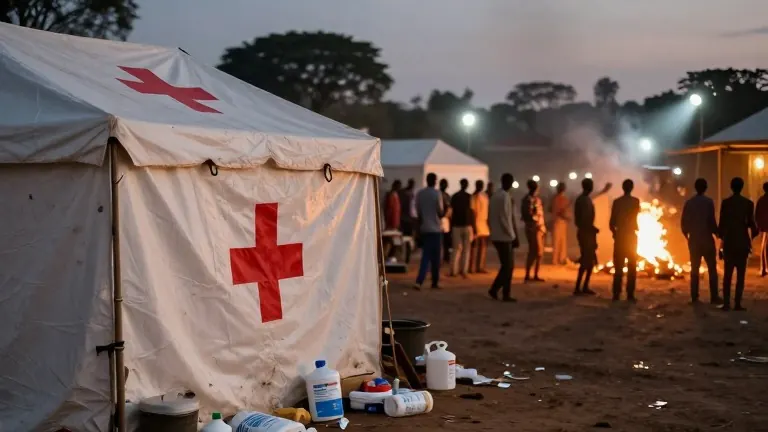
Faraj and Khalil had collaborated on previous assignments after Khalil contacted her through social media. They set out on April 22 to document the aftermath of a month of deadly airstrikes in southern Lebanon, which ended with an Israeli ceasefire in mid-April. The pair met Ali Nabil Bazzi, a 27-year-old municipal official from Bint Jbeil, and Mohammed Hourani, a 37-year-old friend of the mayor, at the Tebnine governmental hospital. Bazzi was joining the trip despite having a marriage contract to sign that evening.
As the group approached al-Tiri, a missile struck the car ahead, killing Bazzi and Hourani. Faraj did not hear the initial impact but heard Khalil scream. When drones arrived, flying low and close, Faraj and Khalil sought shelter in a nearby house. Emergency services assured them help was coming, but a paramedic instructed them to drive back up the road because ambulances were blocked. As they moved, their car was hit by a missile, throwing them backwards. Khalil wrapped her arms around Faraj, hoping the drones would mistake them for dead bodies.
Faraj sent a final message to her sister, saying, "There's no hope left. Forgive me," before her phone died. She woke trapped under debris, barely able to breathe. A paramedic held her by the shoulders while a second cleared the rubble. A drone dropped a stun grenade nearby, and in the ambulance, Faraj mistook the engine noise for another drone. Khalil, who was bloodied on the face, hand, and leg, could not move in the shelter. She is believed to have died about an hour before paramedics were allowed back to the area after rescuing Faraj.
The Israeli military stated it had identified saboteurs violating the ceasefire. Human rights groups labeled the attack a war crime, noting that the military received repeated messages requesting permission for a rescue. A week before the strike, an Israeli military spokesperson had shared a video of Khalil and labeled it "terrorist media." Khalil also received death threats from Israeli numbers.
Faraj wakes at night screaming and remains on edge when she hears drones or warplanes. She is haunted by the sight of Hourani on the ground, his eyes open. Whether she will return to frontline journalism is uncertain, but she continues to cope with the visible injuries that affect her movement.
Source: The Guardian