Harmony Node Expanded ISS Capacity in 2007
The 24-foot utility module delivered by Space Shuttle Discovery doubled the station's living space and connected European and Japanese laboratories.
By Juan Gonzalez ·
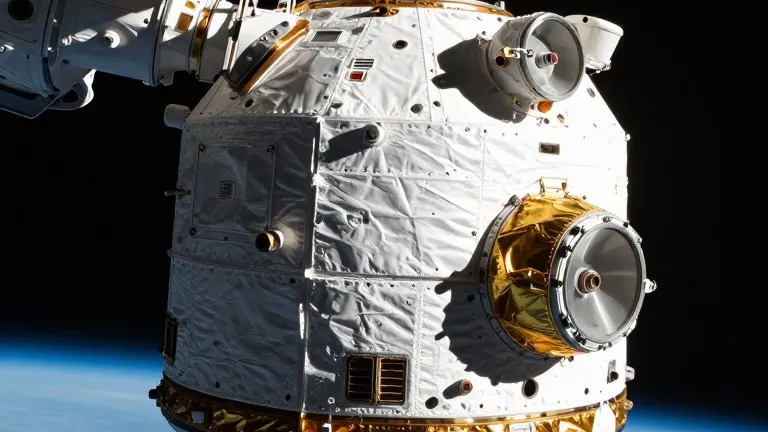
Space Shuttle Discovery launched on October 23, 2007, carrying the Harmony module to the International Space Station.
The payload arrived during the STS-120 mission. Harmony measures 14 feet wide and 24 feet long. That length is comparable to a minibus. The structure serves as a utility hub for the orbiting complex.
The module connected to the Columbus laboratory from the European Space Agency and the Kibo laboratory from Japan. It also houses the sleeping quarters for American astronauts. Before this addition, the station was roughly the size of a three-bedroom house. With Harmony installed, the complex grew to the size of a five-bedroom house.
Astronauts attached the module temporarily to the Unity node during the shuttle flight. After Discovery departed, the crew used the station robotic arm to move the shuttle docking port at the Destiny module. That action cleared the forward port for Harmony to be berthed permanently.
The mission ended a six-year gap in new room construction. Russia attached the Pirs docking module in 2001, which was later discarded. Harmony, originally designated Node 2, was the second hub built by NASA after Unity. Italy-based Thales Alenia Space constructed the module for the agency. It features five common berthing mechanisms for future connections.
The STS-120 flight lasted approximately two weeks. Crews moved Harmony to the forward port of the Destiny laboratory. From that position, it links the Columbus lab on the starboard side and the Kibo lab on the port side. Some ports accommodate visiting cargo ships. A port on the roof allows visiting vehicles to dock.
Harmony contains eight payload racks inside. Four are reserved for avionics. The other four provide stowage or crew quarters. NASA selected the name through a public contest.
Source: Space.com