Macron's Government Faces Street Chaos as 980 Arrested in France
Police deployed 70,000 officers to contain cost-of-living protests that turned violent in Paris, Marseille, and Bordeaux.
By Kavya Kapoor ·
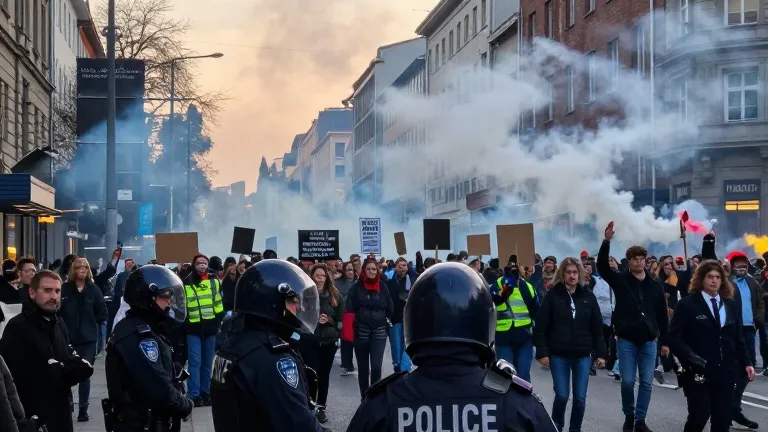
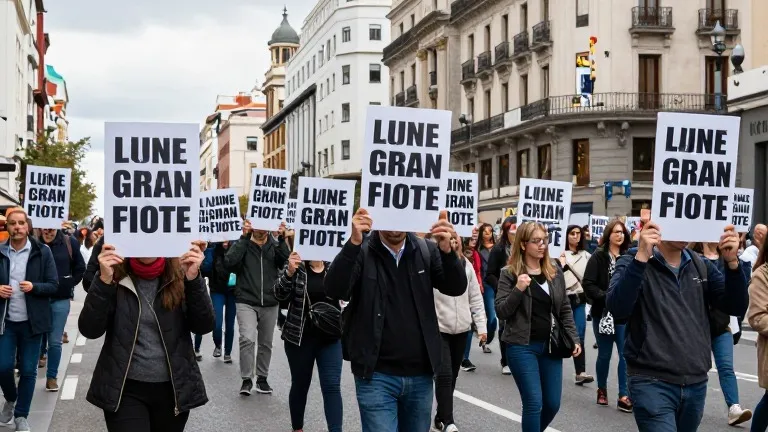
French police arrested close to 1,000 people on Saturday as hundreds of thousands of citizens took to the streets in a new wave of nationwide unrest. Interior Minister Laurent Nuñez confirmed the arrest count late in the day, noting that the figure was likely to rise. He reported that two individuals suffered serious injuries, one in Toulouse and the other in Clermont-Ferrand. The demonstrations were largely peaceful during the day but turned violent in several cities as evening approached.
The government prepared for heavy resistance by deploying approximately 70,000 police officers. This deployment followed a decree issued earlier in the week by President Emmanuel Macron, which restricted official demonstrations to those organized by recognized trade unions. Officials aimed to prevent a repeat of the previous weekend's chaos, which saw officers outnumbered, hundreds of businesses looted, and buildings torched. In Paris, an elite unit typically assigned to organized crime and counter-terrorism operations was part of the police effort.
Violence erupted in Paris as a march from Porte d'Italie toward Porte de Vincennes ended in clashes. Protesters constructed makeshift barricades and threw objects at officers. Police responded by charging groups of masked youths who were breaking windows at a car dealership. Nuñez stated that several thousand radical activists, including around 500 identified rioters, gathered at the rear of the march. In Marseille, demonstrators set fire to barricades and rubbish bins, while in Bordeaux, people tore boards off a shop.
Turnout estimates varied widely between authorities and organizers. The interior ministry calculated the number of demonstrators at 410,000, whereas unions claimed the figure reached approximately 800,000. Police used tear gas and water cannon to disperse crowds in multiple locations, including Paris and Lyon. In Lyon, officers fired gas at a crowd in an area the local prefecture had declared off-limits. One protester in Lyon, part of a group of about 150 students, said visibility in the street was nearly impossible.
Demonstrators expressed deep frustration over living costs and school conditions. A 26-year-old Parisian protester named Zelie told the BBC that people were suffering a lot and that the situation had become too much. Two masked teenagers described their generation as feeling abandoned by the government. One admitted that looting was not ideal but blamed poverty and police violence for the unrest. In Orléans, roughly 13,000 people rallied peacefully against the hard-right National Rally party.
The unrest extended beyond French borders. Riot police in Tirana, Albania, fired tear gas at thousands of anti-government demonstrators, and clashes were reported in Brussels. In Milan, hundreds of soldiers and police blocked protesters from gathering to avoid a repeat of the previous week's violence. Last weekend, approximately 550,000 people demonstrated against rising fuel prices, leading to more than 2,500 arrests. The Chambers of Commerce and Industry estimated the damage to over 2,000 affected businesses at hundreds of millions of euros.
With presidential elections six months away, leading political contenders have begun blaming Macron and his ministers for the instability. The government continues to manage the aftermath of a week marked by fast-track court hearings that resulted in hundreds of jail sentences for vandalism, arson, and looting.
Source: BBC News