Sudan Transport Union Lifts Fares 40% as Fuel Lines Reach Five Hours
Intercity bus tickets rose 40% this month, and minibus fares climbed 30%, after attacks on the Balila oil field cut output.
By Jian Chen ·
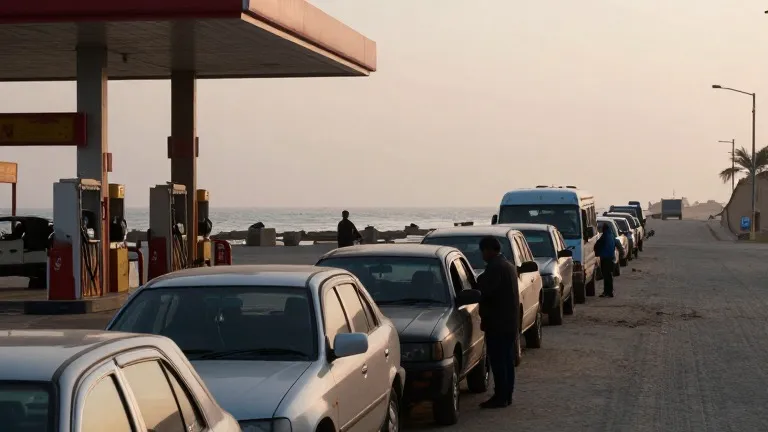
Sudan's Transport Chambers Union raised intercity bus fares by 40% and minibus fares by 30% this month, following weeks of fuel queues that can exceed five hours. The union regulates public and private transport across the country. Fares had already climbed with the cost of petrol, which sells for 40,000 Sudanese pounds ($4.30) a gallon in Gazira State and 35,000 pounds ($3.80) in Port Sudan.
Azhari Mohamed, 60, drives a minibus in Port Sudan between the Shagar neighbourhood and the city centre, carrying eight passengers at a time. He starts at 6am and finishes at 9pm, making seven round trips a day. The vehicle burns three gallons (11 litres) of petrol daily, about 105,000 pounds ($11.30) at the parallel-market rate. Fuel scarcity has cut his schedule: he works two days and spends a third waiting in line, and a wait can top five hours. Sometimes petrol runs out before he reaches the pump, sending him to the back of another queue.
After operating costs, Azhari keeps about 50,000 pounds ($5.40) a day for his wife and a daughter at university. "We just need fuel to be available so we can work," he said.
The shortage traces back to the war between the Sudanese Armed Forces and the Rapid Support Forces, which began on April 15, 2023. The World Bank reported that attacks on the Balila oil field disrupted supplies to the Khartoum refinery, which used to meet about 60% of national demand for petrol and liquefied petroleum gas. The Ministry of Energy and Petroleum put war-related losses at $20 billion last year. The United Nations Development Programme said the conflict has pushed average incomes back to levels last seen in the 1990s.
Passengers are paying more for the shortfall. Aziza Ibrahim, 38, cleans offices in Port Sudan to support four children. She has cut her work to three days a week because of travel costs. Before the war, her trip to the main city-centre station cost 700 pounds ($0.08). Fares now run 2,000 to 2,500 pounds on various routes, and the round trip takes 11,000 pounds ($1.18) a day. Transport absorbs nearly half of her 400,000-pound monthly salary ($43), and she also pays for diabetes treatment. She sometimes borrows to reach work and repays the loan when paid.
Traders face the same arithmetic. Ahmed al-Haj, who packages skincare products including petroleum jelly in Omdurman market, said higher diesel and petrol prices have lifted the cost of moving a tonne of goods by 30 to 50 percent, and that increase passes into product prices. Local deliveries in Omdurman that once cost 5,000 pounds ($0.70) now run 10,000 to 12,000 pounds ($1.07 to $1.29), and reaching customers in other states has become impossible. When power cuts force him onto a fuel-powered generator, his daily costs rise further.
Economic analyst Sidi Ohaj said import rules have tightened supply further. Importers must deposit 200kg of gold in the Central Bank and own fuel storage facilities; some could not comply and left the market. "This reduced supply relative to demand," he said, calling for the government to ease import procedures. With domestic output sharply reduced, Sudan depends on imports at a time when a global fuel crisis has raised prices for gas, petrol and diesel.
Source: Al Jazeera
More Business · World news · Customer Complaints · Report a business