Texas Builders Erect Fences to Block ICE Entry Without Warrants
Construction firms in the Rio Grande Valley are installing barriers and signage to assert private property rights amid intensified immigration enforcement.
By Leila Mori ·
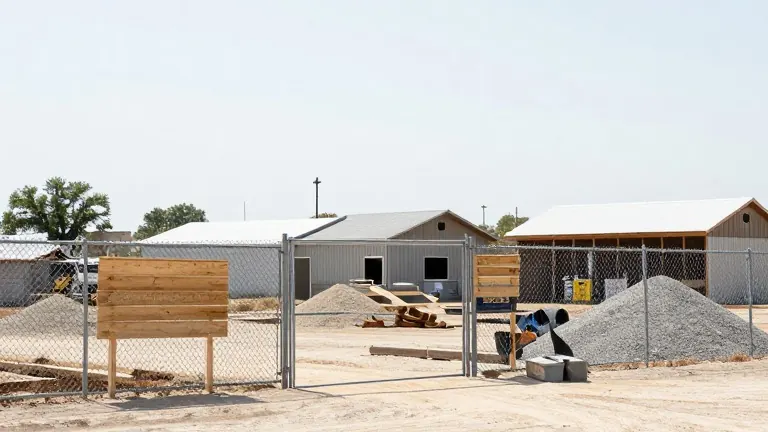
Construction companies in southern Texas are installing wire fences and posting signs around their job sites to prevent agents from the U.S. Immigration and Customs Enforcement (ICE) from entering without a judicial order. These physical barriers have become a common sight in the region as local business owners seek to define the limits of their private property in the face of recent enforcement actions.
The measures follow a reported increase in immigration operations over the past several weeks. Industry leaders state that the fear of being questioned or detained based on appearance is causing workers to avoid their jobs. This trend affects employees regardless of their legal status, including those holding valid work permits.
In San Juan, Texas, construction owner Benigno Meléndez installed fencing to mark the boundaries of his property. He explained that agents often treat an open area as public unless it is clearly demarcated. "If you don't have a fence with a sign that says 'do not enter,' they don't consider it private and they come in," Meléndez said. He noted that these steps are intended to stop agents from entering construction sites without a judge's warrant.
The disruption to the labor force is a primary concern for business owners. Meléndez pointed to a recent incident in Brownsville where an ICE agent pointed a pistol and a pepper spray cylinder at a worker who identified himself as a U.S. citizen. He questioned how workers could show up to work while facing the risk of such confrontations.
The anxiety extends to documented workers. Yahaira Martínez, who owns a construction firm, observed that employees are afraid to go to work due to the current immigration climate. "Even if they are here legally with permits and everything, they are still afraid to go to work because of everything that is happening with immigration," Martínez stated.
Mario Guerrero, CEO of the South Texas Builders Association, said government guidance suggested that properties must be fully enclosed to be considered private. "This is what the U.S. government told us: if your property is not fully closed off, in front and back, even a house is not private," Guerrero said. The association has requested federal assistance, citing indiscriminate arrests and difficulties in replacing lost staff.
Ronnie Cavazos, president of the South Texas Builders Association, criticized the current enforcement approach. He argued that the system needs repair before laws are strictly enforced. "How do we strengthen the laws of a broken system?.. First fix the system and then enforce the laws; so for me, it was done backwards," Cavazos declared. Firms view these barriers as a practical method to reduce uncertainty and protect daily business operations.
Source: KUVN-DT