Votel: Fresh Iran Strikes Will Degrade Targets but Not End War
Retired Army general argues that a post-election bombing campaign needs clear political goals to succeed, noting that financial pressure is currently yielding more results than airpower.
By Rafael Ortega ·
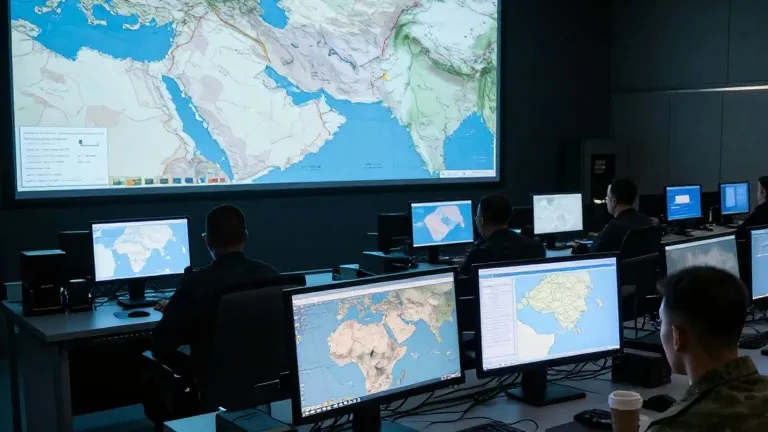
Retired Army Gen. Joseph Votel stated that new U.S. and Israeli airstrikes on Iran are unlikely to end the current war. Speaking to NPR, Votel, who led U.S. Central Command from 2016 to 2019, argued that while fresh attacks can weaken Iranian capabilities, they have not yet altered Tehran's strategic calculations.
Votel noted that many probable targets have already been struck in previous campaigns. He observed that Iran has demonstrated the ability to rebuild these assets. Consequently, the primary effects of additional bombing are to punish Tehran, buy time, and degrade specific military functions. He did not view the strikes as a standalone solution to the conflict.
The former general emphasized the need for a defined end state. He identified two principal objectives for Washington: resolving the nuclear enrichment issue and reopening the Strait of Hormuz to global commerce. Votel argued that military, economic, diplomatic, and informational tools must be coordinated to achieve these specific goals, rather than relying on airpower alone.
Financial pressure is currently showing tangible results, according to Votel. He pointed to the blockade and existing sanctions as effective measures. Citing recent reports, he noted that Iran's shadow fleet of tankers has depleted its oil supplies. While this economic squeeze takes time to fully materialize, Votel described the progress in this area as definite.
On the military front, Votel assessed that U.S. offensive capabilities in the region remain substantial. He stated that the ability to conduct strikes is not in question. However, he identified missile defense as a potential constraint. Existing reporting indicates heavy pressure on the defensive interceptors that protect U.S. forces and regional infrastructure. Votel concluded that while offensive power is sufficient, defensive systems face a tighter limit.
The interview comes as the Iranian government has adopted a harder line and increased bold counterattacks. Votel said that for the U.S. to bring Iran to the negotiating table, it must clearly state its objectives and maintain patience in applying combined pressure. The current military posture supports continued strikes, but the general emphasized that clarity in political goals is the prerequisite for success.
Source: NPR