Knesset balance: Palestinian voters hold the deciding margin
Polls indicate that 12 to 15 seats held by Arab citizens will determine which coalition governs Israel following next week's vote.
By Daniela Vargas ·
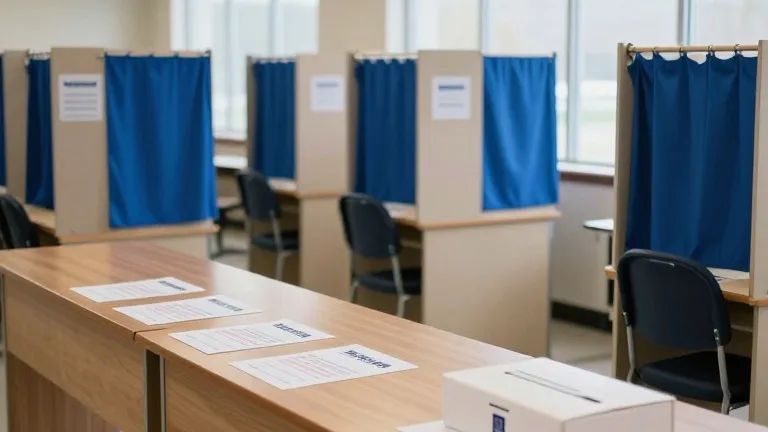
Palestinian citizens of Israel are positioned to determine the outcome of the national election scheduled for next week.
Current polling data indicates that Benjamin Netanyahu’s far-right coalition will lose its majority in the 120-seat Knesset, yet the Jewish Israeli opposition is also projected to fall short of the 61 seats required to form a government. This leaves a decisive gap that Arab voters, who constitute approximately 20% of the population, are expected to fill. Projections suggest these voters will secure between 12 and 15 seats, divided between the Islamist Ra'am party and the Joint List, an alliance that includes the Ta'al party.
Ahmad Tibi, head of Ta'al and a Knesset member for more than two decades, stated that high turnout among the Arab community is a primary tool for toppling the current government. "We are determined to do everything in order to bring this government down," Tibi said. Despite this, most Jewish Israeli opposition parties have ruled out a coalition with Arab politicians, while Netanyahu’s camp has campaigned against such alliances using slogans like "Bibi or Tibi." This rhetoric persists despite the fact that Israel has had only two Palestinian ministers in its history: Raleb Majadele and Issawi Frej.
Historical precedents suggest that political positions may shift once results are finalized. In 2021, Ra'am leader Mansour Abbas joined a coalition with Naftali Bennett, who now opposes that alliance, and Netanyahu previously opened talks with Abbas. Amjed Iraqi of the International Crisis Group noted that a returning far-right coalition would have a renewed mandate to accelerate policies of ethnic cleansing and annexation. He described the current vote as a choice between mitigation and a more aggressive approach to governance.
Fear drives much of the turnout, fueled by the war in Gaza, violence in the West Bank, and rising discrimination within Israel. Sami Abu Shehadeh, leader of the Balad party, identified fear as the biggest motivation for voters. This sentiment follows the supreme court’s decision last month to effectively force Abu Shehadeh out of the race over an article regarding the 7 October attacks, a ruling widely criticized for applying different standards to Jewish and Palestinian citizens. The election also occurs two days before the town of Kfar Qasim marks the 1956 massacre in which border police killed 49 residents.
Amid these tensions, some voters remain hesitant to participate due to long-standing distrust of the system. Nagham Zbeedat, a journalist for Haaretz, cited her refusal to legitimize a system that treats her rights as favors. However, others, such as Mohammed, a manager at a hi-tech company, are urging friends of all backgrounds to vote, arguing that the mathematical reality of the seat count will eventually force coalition partners to accept Arab politicians. Tibi acknowledged the difficulty of the choice, describing it as a decision between "bad and worse" rather than a clear ideological alignment with the opposition.
Source: The Guardian