Tennessee Lawyer Claims Execution Team Reported Vein Failure in Pike Case
A legal filing reveals that medical staff struggled to access Christa Pike's veins and suspected ruptures before administering the second lethal dose.
By Marcus Johnson ·
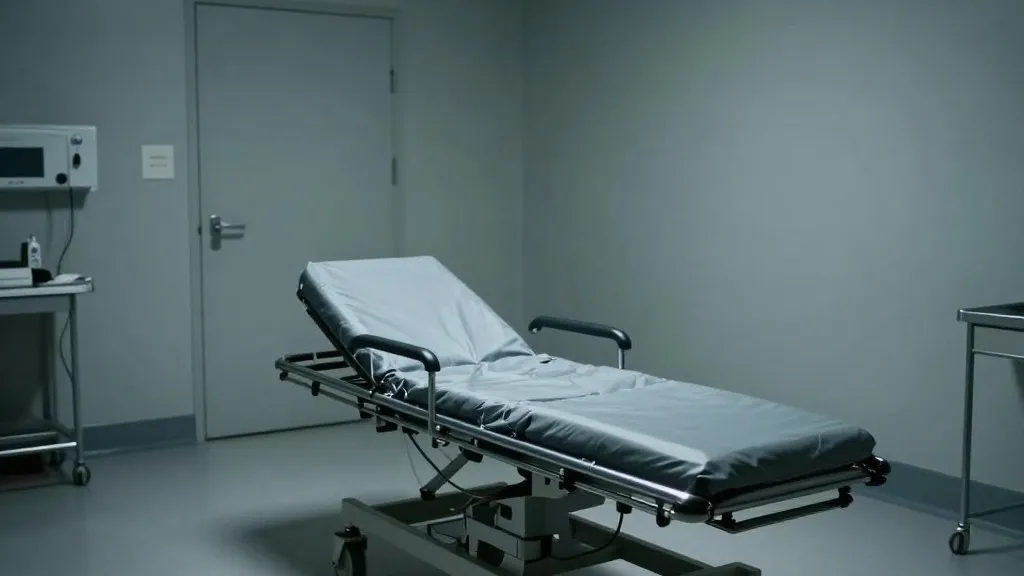
A court document filed Thursday provides the most detailed account to date of the failed execution of Christa Pike, revealing that the medical team cautioned her veins might have ruptured before injecting the second dose of pentobarbital. The filing, submitted by attorney Randy Spivey, describes a chaotic procedure in which staff used approximately ten needles and struggled to establish functional intravenous lines in Pike's arms. The paperwork offers a granular timeline of the events that led to the 50 year old prisoner surviving a state sanctioned death attempt in late September.
Pike, who was convicted of the 1995 stabbing death of her classmate Colleen Slemmer, was placed on a ventilator after the September 30 incident. She had been one of the youngest women sentenced to death after the killing when she was eighteen years old. Although she has since regained consciousness and returned to prison, her survival has intensified scrutiny on Tennessee's lethal injection protocols. The state's rules mandate a second dose of pentobarbital if the first does not cause death, yet they remain silent on the procedure to follow if a prisoner survives that second injection.
The legal filing was submitted within a separate case where death row inmates are challenging the state's execution methods. Kit Thomas, an attorney representing the group of challengers, stated that the outcome confirmed their predictions regarding the likelihood of botched executions. He warned that such errors would continue to occur without substantial changes to the existing procedures.
According to Spivey, the team began attempting to place the two required IVs at 6:34 p.m. While an IV was established in Pike's right arm within six minutes, securing a line in her left arm took nearly an hour. Spivey noted that Pike wincing and grimacing as team members moved needles around. At 6:57 p.m., one team member suggested a vein might be blowing, and by 7:07 p.m., another stated a belief that it was blown. A later needle was found to be severely bent upon removal.
The team declared an IV successfully placed in the left arm at 7:13 p.m. Phone calls to the execution chamber began shortly after, with staff in an adjoining room reportedly asking the IV team to check the left arm repeatedly. At 7:34 p.m., Pike reported a burning sensation and a feeling that her arm was about to bust. Over the next thirty minutes, she strained, flinched, and appeared to struggle to breathe.
Spivey was granted phone access after a seven minute walk through the facility rather than using the witness room phone. He called colleagues at 8:22 p.m. to request the execution be stopped, noting that a third dose was not authorized, and demanded immediate medical care. He was informed at 8:50 p.m. that an ambulance was en route, and medical staff were performing life saving measures about twenty minutes later. An ambulance arrived at the hospital at 9:14 p.m.
The case now moves to the next phase of legal proceedings where the specific failures of the medical team will be weighed against state protocols. The filing sets the stage for further debate on whether the state's current methods meet the standard of care required for capital punishment.
Source: CBC News