UK Government Pushes Three-Day Household Stockpile Target
Shoppers in Britain are buying dried foods, water, and power banks following a new official campaign citing Russian threats and climate risks.
By Andrew Fletcher ·
The UK government launched a new campaign on Thursday.
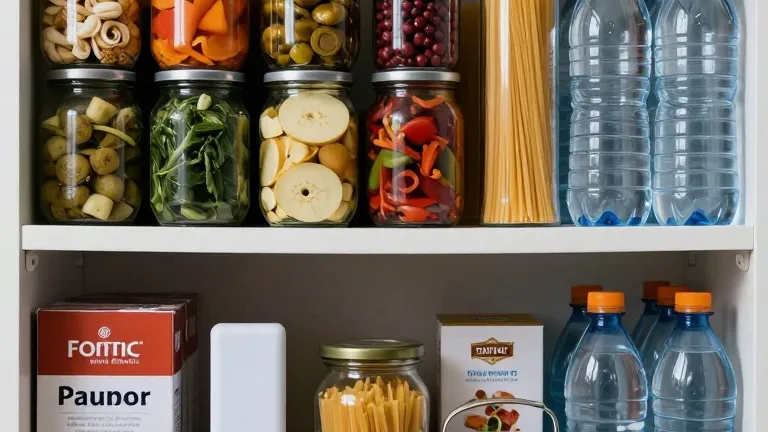
The initiative urges residents to store enough supplies for three days.
Ministers cite Russian state-sponsored terrorism and climate change as key risks.
Officials have sent similar signals for several months prior to this formal announcement.
Lawrence Barratt, a resident of Hythe in Hampshire, began stocking his pantry about two weeks ago.
He is adding tinned beans, soups, noodles, and rice to his weekly shopping trips.
Barratt is also purchasing bottled water and a battery-powered FM radio.
He aims to have enough resources to sustain two people for 72 hours.
He uses a portable power bank to charge phones and run small appliances.
Marco Camurri from Greenwich, London, is taking a similar approach.
His family stores pasta, passata, stock cubes, and medicines.
Camurri keeps power banks charged and maintains fuel levels above 50 percent for his car tank, which allows for about 300 miles of driving range. His family started this process a few months ago after reports of supply chain disruptions linked to El Niño. They track expiry dates in a spreadsheet to rotate items in their storage, which they call a Doomsday Stash. Camurri notes that his family can travel to relatives in continental Europe if the UK enters a state of war or faces extreme infrastructure failure. Jack Davenport from North Shields also points to El Niño as a motivator. He describes the current threats as difficult to judge in size. He lists climate disasters, Russian shadow threats, and energy-driven interest rate rises as concerns. Davenport argues that the country's physical and technological infrastructure is creaking and outdated. He suggests the government wants to reduce long-term panic by framing these events as possible rather than certain. Not every resident agrees with the new guidance. Deirdre O'Sullivan from Leicester called the advice daft. She compared it to 1970s instructions to hide under tables during nuclear attacks. O'Sullivan argues the guidance is inadequate for a genuine emergency. She believes any danger to drinking water should be anticipated with more precision. She also contends that an extreme food shortage would become apparent over a much longer period than three days. O'Sullivan likens the policy to a scenario from Yes Minister, where a government creates a policy to appear active even if it is useless.
Source: The Guardian