Lula Wins Fourth Term in Brazil
The 80-year-old president defeated Flávio Bolsonaro with 51.79% of the vote after a narrow first-round deficit.
By Owen Khan ·
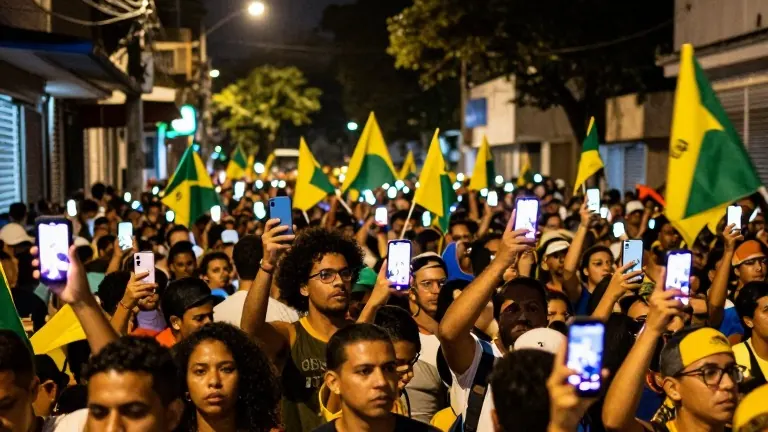
Brazilian voters cast their ballots on Sunday in a runoff that determined the country's leadership for the next four years. The result shifted power back to the left after a series of political reversals. Luiz Inácio Lula da Silva, known as Lula, secured a fourth nonconsecutive term in office. He defeated far-right senator Flávio Bolsonaro in a vote that was decided by a margin of approximately 4.3 million votes.
Lula received 51.79% of the total count. Flávio Bolsonaro garnered 48.21% of the vote. This outcome represents a major shift in the campaign's trajectory. In the first round held earlier in October, Bolsonaro led with 47.03% of the vote compared to Lula's 45.16%. No first-round runner-up had ever won the subsequent second ballot in Brazil since democracy was restored in 1985. The 80-year-old incumbent turned this deficit into a victory in the final weeks of the campaign.
The race tightened as the two candidates moved closer in polling data. Bolsonaro refused to acknowledge the loss immediately after the results were declared. He cited the decision to extend voting hours by two extra hours as a reason for his stance. Both campaigns had requested this extension for different strategic reasons. Lula described the result as a defeat for denialism. The vote took place just days before Lula's 81st birthday, scheduled for Tuesday.
The campaign was marked by intense mobilization efforts from the progressive base. A record 21% of eligible voters abstained in the first round, a trend more common among lower-income groups. To counter this, millions of supporters joined a WhatsApp channel known as Lula's army. This group distributed daily instructions on how to create and share supporting content online. The incumbent, who recently acquired his first smartphone, began posting on Instagram and TikTok. For the first time, his digital reach surpassed that of his opponent.
Environmental policy played a role in the final debate, though it was not the primary focus for many voters. Under Lula's current administration, deforestation in the Amazon has dropped by more than 70%. His government has also cracked down on illegal mining operations that have affected Indigenous reserves. Flávio Bolsonaro’s platform mirrored his father’s approach, which critics argue facilitated an illegal gold rush in the region. Jair Bolsonaro, the former president and Flávio’s father, is currently serving a 27-year prison sentence for plotting a coup after losing the 2022 election.
The outcome has international implications for trade and climate policy. US President Donald Trump, who previously imposed 50% tariffs on Brazilian imports, watched the vote closely. Trump had previously called the trial of his ally Jair Bolsonaro a witch hunt. Lula has positioned himself as a defender against what he terms colonial designs from Washington. His victory supports a multilateral foreign policy approach that maintains pragmatic relations with the US, China, and Russia. He has also rejected invitations to join a coalition of Latin American nations conducting military operations against drug cartels alongside the US military.
Flávio Bolsonaro is expected to head to the United States in the coming days to avoid ongoing criminal investigations. Political analysts suggest his political career is likely over following the loss. The name Bolsonaro has become toxic for a slight majority of Brazilian voters. Lula will now work with a newly elected congress that includes a record number of right-wing politicians. These legislators are often hostile to Indigenous rights and environmental protections, which could complicate the implementation of Lula's green agenda.
Source: The Guardian